
Arlington County Deed Records and Instruments
The Circuit Court clerk accepts original signed and notarized instruments. These instruments affect real property in Arlington County and Falls Church. A deed conveys an interest in land. Related instruments serve other legal roles. Some secure a debt or release a lien. Others document a judgment or map a subdivision. Each type appears in the land index under its own record group.
| Deed Type | What It Does | Common Use |
|---|---|---|
| Deed | Recorded transfer and legal description | Trace a conveyance or confirm the instrument tied to a parcel |
| Deed of trust or mortgage | Security instrument related to a loan | Check a recorded encumbrance and later satisfaction |
| Certificate of Satisfaction | Recorded release after a deed of trust is paid | Confirm the release was filed |
| Judgment abstract | Judgment filed in land records | Follow the recording and any later release |
| Financing statement | Secured-transaction record when the clerk is the proper filing office | Check amendments, continuation, or termination |
| Plat | Recorded subdivision or state-highway map | Read a lot description; it is not an individual survey |
A deed proves a recorded transfer. A deed of trust, judgment, or financing statement plays a different legal role entirely. The index does not interpret instruments. It offers no title opinion either. Read the document itself and compare the parties, recording details, and land description.
The Arlington County Grantor-Grantee Index
Arlington Cloud Search is built around parties and recorded instruments, not the assessor's address card. A grantor conveys an interest. A grantee receives it. Start with a current owner name from DREA. Find that party as grantee, then read the prior deed reference and the former owner named in the instrument. Field labels and dropdown choices in the live form vary, so test the filters rather than assuming a document-type option.
- Search the current owner as a possible grantee and compare the result's land description with the assessment card.
- Open the latest matching deed and note the grantor, prior reference, recording date, and legal description.
- Search the prior owner as grantee to locate the earlier acquisition, keeping each transfer in date order.
- If remote results stop or an old image is hard to read, continue with courthouse deed books and microfilm.
- Grantor
- The party conveying an interest in the recorded instrument.
- Grantee
- The party receiving the interest named in the instrument.
- Chain of title
- The sequence of transfers and related records for the same land.
- Book and page
- A reference used to locate a recorded document; older material may be in deed books.
Getting an Arlington County Deed Copy
Basic index information is free once you register for Arlington Cloud Search. Remote document images cost $0.50 per page plus a $2 transaction charge. An approved subscription runs $50 monthly or $600 annually. Courthouse self-service copies also cost $0.50 per page. Certification is $2 per document on the services page. Fees change, so confirm the clerk's current copy instructions before ordering or filing.
Mail requests are capped at five documents. Each needs the deed-book and page reference, a self-addressed stamped envelope, and a check, and the clerk advises callers to confirm the page count first. A search result may name an instrument without showing a complete image for free. Match the party names and legal description before paying.
Recorded, not guaranteed. Arlington County deed records show filed instruments, not every possible claim or the legal effect of each document. A title examination is a separate professional review.
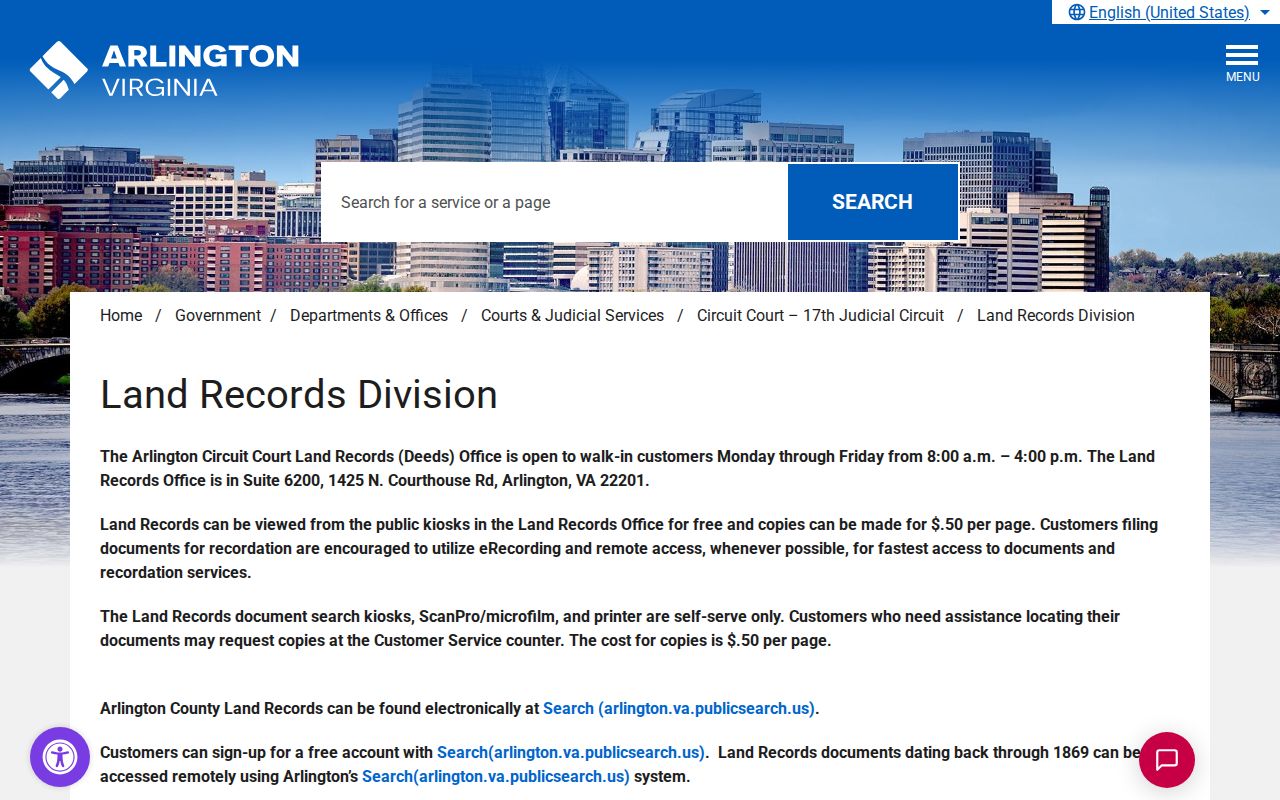
Arlington County Deeds Back to 1869
Remote land-record access reaches back through 1869. That span is unusually deep for Arlington County property history. The stated depth is not a promise of perfect indexing. The clerk keeps records on computer, microfilm, and in original deed books. An online search may stall. Ask at the public counter about an older book or film reference.
Courthouse research offers kiosks, ScanPro stations, microfilm, and self-service printing. Staff give general guidance only. The researcher does the search. The online index and courthouse tools are two doors into the same land records. Save each reference. Note whether it came from a book, page, or instrument record.
A historic-property guide places modern deeds beside older maps. Sources include a 1900 property-owner map. The 1925 county engineering material is another. Franklin atlases, historic aerials, and plat maps complete the set. Those sources help decode a land description from before today's street pattern.
Arlington County Deed Copy Channels
Remote search is not the only route to an Arlington County deed. The clerk offers online images. Courthouse research and printing is another channel. Mail copies are available in limited cases. Pick a channel based on your reference. Also decide whether an ordinary or certified copy is needed. The services page links to instructions and current forms. The Arlington County Land Records services page breaks out online, on-site, and mail access. Check its current fees before submitting any request.
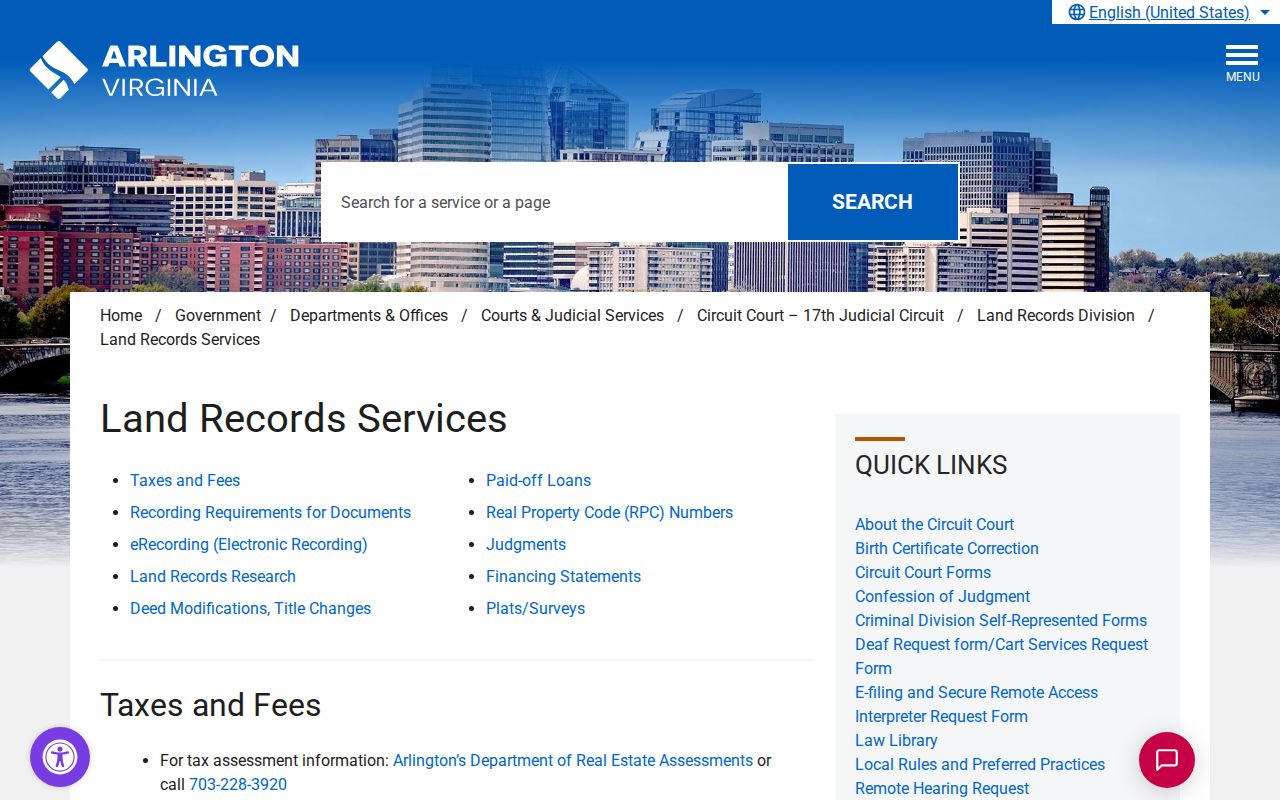
The page is the practical next step with a document reference in hand. Without one, start with the party index. Or ask the clerk what detail is needed.
Arlington County Certificates of Satisfaction
A paid deed of trust deserves one more search. A recorded Certificate of Satisfaction should follow the payoff. Arlington County's FAQ says the lender should cause it to be recorded within 90 days. Search the land index for both, instrument and release. Never assume a paid loan vanishes from the public record.
A release or satisfaction is its own recorded document. Compare its parties and reference to the deed of trust. If no release appears, contact the lender or clerk. A missing online match alone proves nothing about payment or legal remedies. Judgment abstracts and other recorded claims need their own release or court disposition.
The Land Records services page lists judgment and copy details. Filing a judgment abstract carries a $10 charge, foreign judgments run $25, and amendment and assignment charges are listed too. Confirm current fees on the clerk's calculation page.
Arlington County Property Alert
Property Alert watches the land-records index for subscribers. Registered Cloud Search users choose their criteria. The county sends notice whenever a matching document is filed. Treat the notice as an early warning, nothing more. It is not a finding of fraud. It is not a legal ruling on title. An alert simply tells you to look quickly at a new filing before problems grow. Pull the actual instrument and read it. Compare what was recorded against what you expect. Ask the clerk or a title professional for help if anything seems off.
The county's Land Records page explains the service and connects it to Cloud Search. That page also displays the county's current property-alert information. Check the enrollment steps there directly. Alert criteria and portal behavior can change over time.
An alert only signals that a matching record may exist. The recorded document itself remains the evidence worth inspecting.
Arlington County Court and Judgment Records
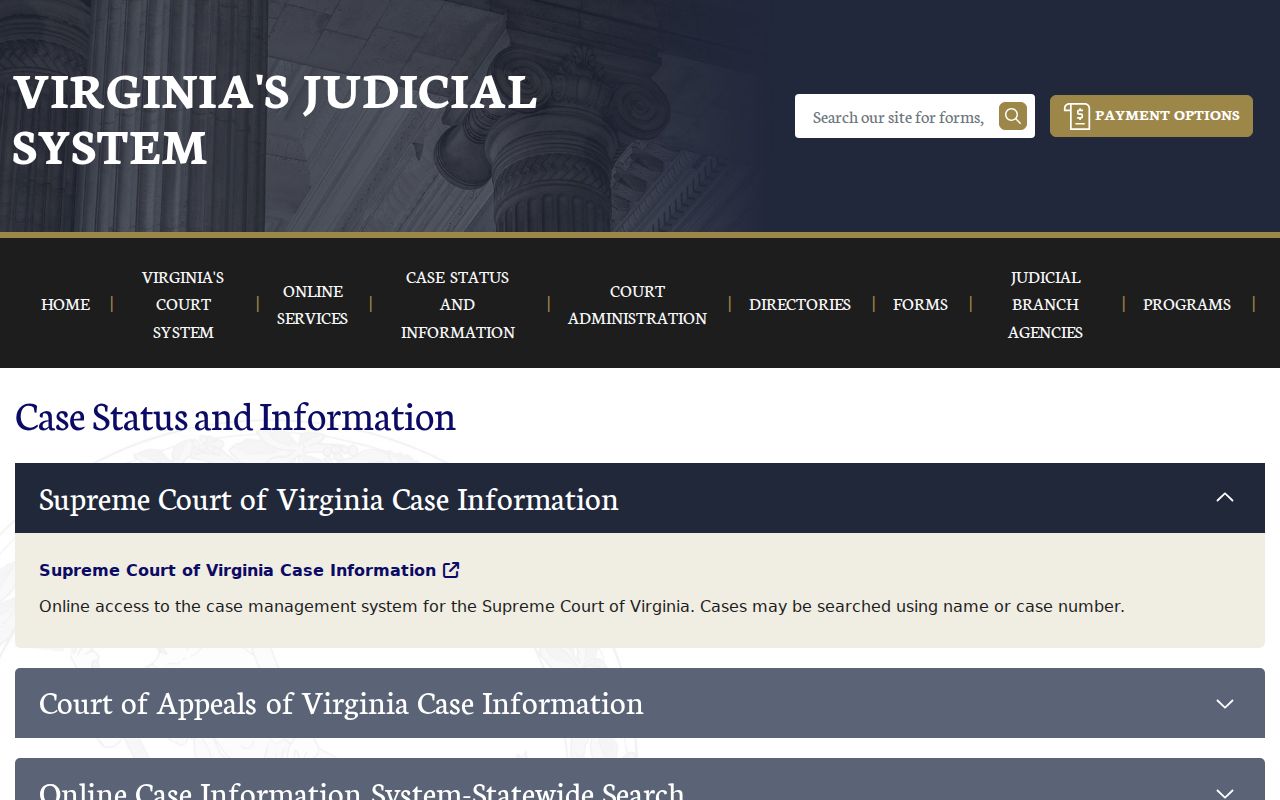
Some property questions reach beyond deeds into Circuit Court files. Civil and probate cases can decide who holds title. Arlington County's Circuit Court sits within Virginia's 17th Judicial Circuit. The statewide Case Status and Information site allows searches by court mode, locality, name, case number, or hearing date where available. Virginia offers no single universal circuit-court search, though. For an archived or unindexed case, the local clerk and the public terminal remain the dependable fallbacks.
Watch for dockets tied to foreclosure, lis pendens, quiet title, partition, mechanic's-lien enforcement, condemnation, probate, or a tax claim. A docket result can surface parties, case type, dates, and current status. It does not prove a transfer happened. For that, confirm a final order or trustee deed in the land-record index itself.
The Virginia Judiciary case-information portal describes its search modes and serves as the statewide entry point. Some local case access still runs through the Arlington clerk.
Ask the clerk about copy and certification charges before requesting a court file.
Arlington County Plats and Legal Descriptions
Land Records keeps subdivision plats and state-highway plats. Zoning may hold a plat for a recent project. These maps show a planned division or a recorded lot layout. They are not house-location surveys. The clerk notes that plats need not accompany every deed. A parcel description can rely on lot and block, a parent tract, or older metes-and-bounds wording.
Always compare the plat reference in the deed against the legal description. Also compare the RPC shown in DREA. The county's historic-property guide suggests combining assessment data, deed references, atlases, and aerials when you rebuild an older parcel's history. A tax polygon is not a boundary ruling. If the question is where a fence or structure actually sits, that is a job for a licensed surveyor.
Falls Church Before Arlington County
The Arlington Circuit Court clerk records real-property instruments for both Arlington County and the City of Falls Church. There is one historic catch. Falls Church documents from before 1988 stayed with Fairfax Circuit Court. A search confined to Arlington Cloud Search can therefore miss a pre-1988 Falls Church transfer. Check the parcel's jurisdiction and dates first. An absent record is not automatically a break in title.
Arlington County deed records work best when the RPC and legal description line up with the instrument. For deeper history, add microfilm, deed books, the 1900 owner map, and the historical archives. A chain of title runs only as far as the sources you searched. A jurisdiction switch may occur. Document it rather than papering over a gap with a guess. The Arlington County former-owner page walks through the prior-owner sequence and its historical methods.